Back to Blog
December 14, 2025
5 min read
Your Guide to Abu Dhabi Salik Free Time and Tolls
Driving in Abu Dhabi? Get clear answers on Abu Dhabi Salik free time, toll schedules, charges, and exemptions. Your essential guide to the Darb system.
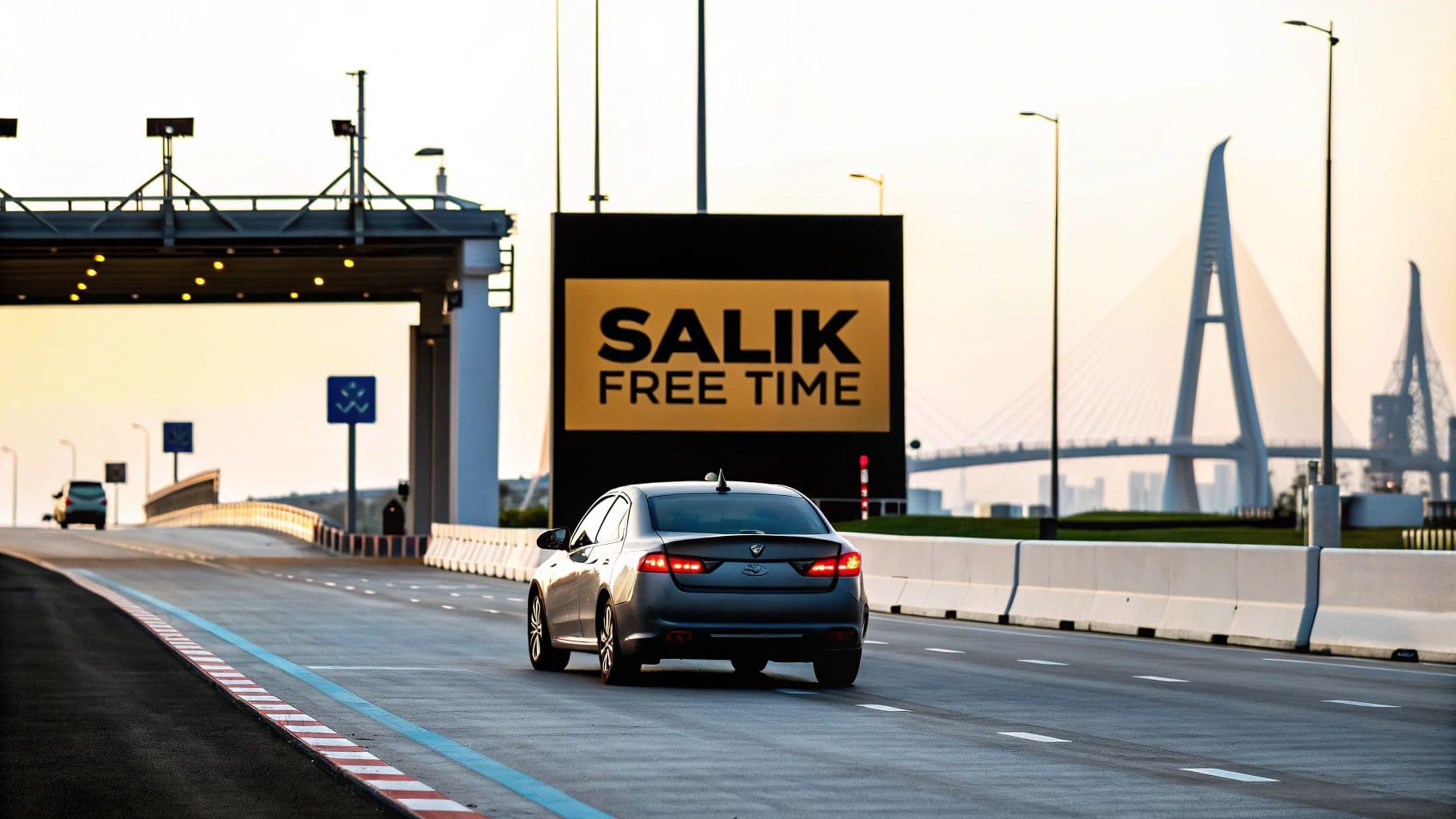
Figuring out Abu Dhabi's road tolls doesn't have to be a headache. The simplest way to think about it is that you can drive completely free on Sundays and official public holidays. For the rest of the week, Monday to Saturday, you only pay tolls during a few specific peak hours. That means most of the day is still free.
Your Quick Guide to Abu Dhabi Toll Free Times

Knowing when you get charged versus when you can drive for free is the secret to managing your travel budget in the capital. Unlike Dubai's 24/7 Salik system, Abu Dhabi’s toll system—officially known as Darb—was cleverly designed to only target the absolute busiest travel times.
This smart approach helps ease up the notorious traffic jams during the morning and evening rush hours without penalizing drivers during off-peak periods, weekends, or holidays. The system operates from Monday to Saturday, but only within two specific windows.
Darb Toll Gate Operating Hours
The Darb toll gates only switch on during the peak morning and evening commutes. So, if you plan your trips outside these very specific times, you won't be charged a single dirham.
- Morning Peak Hours: 7:00 AM to 9:00 AM (Monday – Saturday)
- Evening Peak Hours: 5:00 PM to 7:00 PM (Monday – Saturday)
Any travel outside these four hours on weekdays is completely free of charge. This intelligent scheduling makes a huge difference for both residents and tourists, offering plenty of Abu Dhabi Salik free time. The system officially went live on January 2, 2021, with the goal of slashing peak-hour traffic by as much as 16% across the four main bridges leading into the city. For a deeper dive into the system's goals, you can always explore the official announcements from the Integrated Transport Centre.
To make things even clearer, here’s a straightforward table that breaks down the entire Darb toll schedule.
Abu Dhabi Darb Toll Schedule At a Glance
Here is a quick summary of when the Abu Dhabi toll gates are active and when you can drive through them for free.
Day of the Week Toll Timings (Peak Hours) Cost Per Passage (During Peak Hours) Status (Free or Charged) Monday – Saturday 7:00 AM – 9:00 AM AED 4 Charged Monday – Saturday 5:00 PM – 7:00 PM AED 4 Charged Monday – Saturday All other times AED 0 Free Sunday All day AED 0 Free Public Holidays All day AED 0 Free As you can see, planning your drives around these peak hours can save you money, especially if you travel into the city frequently.
Understanding the Darb Toll System Strategy
To really get the hang of the Abu Dhabi Salik free time, you first have to understand the thinking behind the Darb toll system. It's a completely different beast compared to Dubai's 24/7 Salik. Think of Darb less as a simple fee collector and more as a smart traffic management tool. Its real job is to act like ‘surge pricing’ for the roads, zeroing in on the busiest times of the day to keep the capital moving.
The whole idea is to gently nudge drivers away from making unnecessary trips during the most congested hours. By only charging during the morning and evening rush from Monday to Saturday, Abu Dhabi keeps its main arteries flowing when they're under the most strain.
The Four Key Toll Gate Locations
The entire strategy is built around managing traffic across the four main bridges that act as the primary gateways to Abu Dhabi island. These gates are placed precisely where they can have the biggest impact on peak-hour traffic jams.
- Sheikh Zayed Bridge: A true architectural icon and a major artery for commuters.
- Sheikh Khalifa Bridge: The main connection to Saadiyat Island, home to its famous cultural attractions.
- Al Maqtaa Bridge: One of the original bridges linking the island to the mainland.
- Mussafah Bridge: A vital route for industrial and commercial traffic.
By placing tolls at these specific chokepoints—and only during peak times—the system encourages people to either travel at different times, find other routes, or even consider options like carpooling and public transport.
Designed with Commuters in Mind
One of the standout features that really sets Darb apart is its built-in fairness for daily commuters. The system was put together with a lot of thought to prevent costs from spiralling out of control for people who need to cross the bridges for work every day. To make this happen, Darb has some important caps on its charges.
While the peak hour toll is AED 4 each time you pass through, the Darb system caps the maximum daily charge for any single vehicle at just AED 16.
This means that after your fourth charged trip in one day, any other crossings you make during peak hours on that same day are totally free. Better still, there's a generous monthly limit of AED 200 for each vehicle. This is a huge relief for residents and employees who drive into Abu Dhabi daily. These caps were a fundamental part of the system's design, ensuring it works without putting a heavy financial strain on the public. You can read up on the official fee structure on the Department of Municipalities and Transport website. It's a sharp contrast to other toll systems where charges can just keep adding up with no limit.
Of course, here is the rewritten section, crafted to sound completely human-written and natural, following the provided style guide.
Who Gets a Pass on Abu Dhabi's Toll Charges?
While the Darb system is a smart way to keep traffic flowing during the busiest times, it's also designed with a human touch. The government understands that not everyone should have to pay, so they've built in some clear exemptions. It's all about balancing traffic management with fairness and community support.
These exemptions generally fall into two buckets. First, you have vehicles that get a free pass automatically because of the essential public service they provide. Then, there are personal exemptions for specific members of the community, but these individuals need to apply for them. Figuring out which group you might belong to is the key to avoiding any surprise charges.
Individuals Who Can Apply for an Exemption
To ease the financial strain on certain groups, the government allows specific people to register one vehicle for a toll exemption. It’s a thoughtful approach that shows the system isn't just about collecting fees; it’s about social responsibility.
The groups eligible for this personal exemption are quite specific:
- Senior Emiratis (those aged 60 and over)
- People of Determination
- Low-income Emiratis
- Retired Emiratis
If you fall into one of these categories, you'll need to log into your Darb account and submit an application with the required documents. Once approved, your personal vehicle will be officially marked as exempt in the system. For a full rundown of the steps and paperwork, the best place to look is the official Integrated Transport Centre's Darb portal.
Vehicles That Are Automatically Exempt
Beyond the personal exemptions, some vehicles never have to worry about Darb tolls, simply because of what they do. There's no application needed here; their plates are already flagged in the system, letting them pass through the gates without a charge. This is a practical way to keep essential city services running smoothly.
The idea behind these automatic exemptions is simple: let critical services operate without extra costs or delays, which ultimately helps the city run better for all of us.
Here’s a look at the vehicles that get an automatic free pass from any Darb toll charges:
- Licensed Abu Dhabi taxis
- Public transport buses
- School buses registered in Abu Dhabi
- Ambulances and other emergency response vehicles
- Vehicles belonging to the Armed Forces and Civil Defence
- Motorcycles
This two-part system ensures that while Darb effectively manages traffic, it also looks out for the community's most important services and citizens.
A Practical Guide for Tourists and Visitors
Navigating a new city's road rules can seem daunting, but thankfully, Abu Dhabi's toll system is surprisingly simple, even if it's your first time here. The whole system, known as Darb, is tagless and works entirely off your car’s number plate. No need to worry about sticking anything to your windscreen.
The moment a car registered outside Abu Dhabi drives through a toll gate, the system’s cameras automatically take note. This creates a temporary profile for your vehicle and kicks off a 10-day grace period. This gives you plenty of time to get registered online, create your account, and top up your balance. It’s a seamless process, meaning you can drive straight into the city without any prep work and handle the admin later.
Setting Up Your Darb Account Online
Once the system has logged your car, creating a Darb account is a quick task you can do right from your phone or laptop. It’s designed to be fast, so you can get back to enjoying your trip instead of worrying about fines.
Here’s the breakdown:
- Visit the Official Portal: Head over to the official Darb website or download the "Darb" mobile app from your app store.
- Start Registration: Look for the option to register as a new user.
- Provide Details: You'll be asked for your Emirates ID (if you have one), traffic file number, mobile number, and email. The system will then walk you through adding your vehicle’s information.
- Add Funds: There’s a one-time registration fee of AED 100. The good news is that AED 50 of that is immediately credited to your account as your starting balance. From there, you can top up your digital wallet with a credit or debit card.
This setup gives you full control, letting you check your balance and see a clear record of every toll charge. For more general advice that’s handy across the UAE, check out our guide on [driving in Dubai for tourists](https://www.uptowndxb.com/driving-in-dubai-for-tourists/).
Darb Toll System for Visitors vs Dubai Salik
It’s easy for visitors to get confused, so let’s be clear: Abu Dhabi's Darb and Dubai's Salik are two completely separate systems. Your Salik account in Dubai won't work for tolls in Abu Dhabi, and vice-versa. You need to manage them independently.
To help you get your head around the key differences, we've put together a simple comparison.
Feature Abu Dhabi (Darb) Dubai (Salik) Operating Hours Peak hours only: 7-9 AM & 5-7 PM (Mon-Sat) 24/7, 365 days a year Charges AED 4 per crossing (during peak hours) AED 4 per crossing (any time) Daily Cap AED 16 per vehicle No daily cap Free Periods Free on Saturdays (off-peak), Sundays, and public holidays No free periods Registration Online via website/app Physical tag on windscreen As you can see, the biggest difference is how they charge. Dubai’s Salik, which has been around since 2007, charges a flat AED 4 every single time you pass a gate, day or night. This was a game-changer for easing traffic on Sheikh Zayed Road. Abu Dhabi's Darb, on the other hand, is designed to manage congestion only during the busiest rush hours.

For certain groups, like senior citizens or people of determination, applying for an exemption from Darb tolls is a straightforward online process, as shown above.
Managing Tolls with a Rental Car
Renting a car gives you the ultimate freedom to explore Abu Dhabi, but it naturally brings up the question of tolls. How does that all work?
Fortunately, the system is designed to be completely hands-off and hassle-free for you. Forget about creating a Darb account or registering the vehicle yourself; the rental company takes care of everything behind the scenes.
Your only job is to drive. The rental car's number plate is already linked to the company’s master Darb account. Every time you pass through a toll gate during peak hours, the AED 4 fee is automatically logged against that specific car. Simple as that.
How Billing Works with Rental Cars
So, how do you pay for it? At the end of your rental period, the company tallies up the total toll charges your car accumulated and simply passes that cost on to you. It's a standard and transparent process across the entire industry.
Here’s a quick breakdown of what to expect:
- Toll Reconciliation: The agency pulls the records and adds up all the Darb charges from your rental period.
- Administrative Fee: Most companies will add a small administrative or service fee on top of the actual toll cost. This just covers their overhead for managing the Darb system for their entire fleet.
- Final Invoice: The grand total—the toll charges plus that small admin fee—is then typically deducted from your security deposit or charged to the credit card you have on file.
It's always a good idea to ask about the specific administrative fee when you're picking up the car. Reputable companies are always upfront about these charges, and you'll find them detailed in your rental agreement. This way, there are no surprises when you get your final statement.
At Uptown Rent A Car, we make sure all our billing is crystal clear and easy to understand. For a smooth booking from start to finish, you can check out our options for [online car rental in Dubai](https://www.uptowndxb.com/online-car-rental-dubai/) and see how we handle all these details for you.
Why Rental Companies Are So on Top of It
Rental companies are especially diligent because of a crucial detail in the system: the grace period.
When a vehicle from outside Abu Dhabi (like many Dubai-based rental cars) passes through a toll gate, the owner—in this case, the rental agency—has a 14-day grace period to register the car and ensure there's enough money in the account to cover the charge.
If they miss this window, the fines start piling up, beginning at AED 100 and escalating quickly. To avoid these hefty penalties, companies are extremely prompt about paying the tolls and then invoicing the customer. This ensures a seamless, worry-free experience for you, the driver.
How to Avoid and Pay Darb Fines

Nobody likes getting fines, and thankfully, the Darb system is designed to make them easy to avoid. With a little bit of attention, you can keep your account in the clear and dodge any unnecessary charges. Most penalties are completely preventable with some simple, proactive steps.
The number one reason drivers get hit with a penalty is a classic one: an insufficient balance in their Darb wallet. If you pass through a toll gate during charged hours and don't have enough to cover the AED 4 fee, the system flags it as a violation.
Another common pitfall catches out drivers with cars registered outside Abu Dhabi. Once you pass through your first gate, the clock starts ticking on a 10-day grace period. You need to get your vehicle registered in the Darb system within that window, otherwise, a fine is coming your way.
Common Fines and How They Work
Understanding how the penalties are structured is the best motivation for staying on top of your account. The fines are set up to escalate if violations keep happening.
- First Violation (after grace period): AED 100
- Second Violation: AED 200
- Third and Subsequent Violations: AED 400
As you can see, these can pile up very quickly, especially if you're a daily commuter. The system does have a ceiling, though—the maximum fine for any single vehicle is capped at AED 10,000.
Think of your Darb wallet like any prepaid mobile plan or coffee card. The easiest way to avoid any trouble is to simply make sure it always has a healthy buffer. That way, crossing a toll gate is something you never even have to think about.
Proactive Steps to Stay Fine-Free
Getting ahead of any potential issues is surprisingly straightforward. If you set up your account properly from the get-go, you can pretty much put the risk of fines on autopilot.
By far, the most effective strategy is to switch on the auto top-up feature. You can do this right inside the Darb app or on their website. Just link your credit card, set a minimum balance, and the system will automatically add funds whenever you're running low. It's a true set-it-and-forget-it solution.
If you’d rather handle things manually, just get into the habit of checking your balance through the app every now and then. You can also view and pay any outstanding fines directly through the official Darb portal, which gives you a complete picture of your account's status anytime you need it.
Frequently Asked Questions
Even with a clear guide, a few specific questions always seem to pop up. We get it. Here are some quick, direct answers to the most common queries we hear about Abu Dhabi's Darb tolls, making sure you have all the details for a hassle-free drive.
Do I Need a Physical Tag for My Car?
Nope, you don't. If you're used to Dubai's Salik system with its little sticker on the windscreen, you can forget about that in Abu Dhabi. The Darb system is completely tagless.
It uses a network of advanced cameras that simply read your vehicle's number plate as you pass under the gantry. This makes the whole process seamless for everyone, especially tourists in rental cars.
What if I Cross a Gate Right When Free Time Starts or Ends?
The system is incredibly precise, right down to the second. If you pass under the gantry at 6:59 AM, you won't be charged. Cross that same point one minute later at 7:00 AM, and the AED 4 toll will apply.
The charge is triggered the exact moment your vehicle crosses the tolling point, so timing really is everything.
Can I Use My Dubai Salik Account for Abu Dhabi Tolls?
This is a critical point for anyone driving between the emirates, and the answer is a firm no.
Your Dubai Salik account and your Abu Dhabi Darb account are entirely separate. They don’t share funds, they don’t share information. You have to register and keep a balance in both systems independently to avoid fines in each city.
This separation is a vital piece of information for all drivers, but it's especially important for international visitors who are exploring multiple emirates. Speaking of which, making sure you understand the local driving rules is key to a good trip; you can learn more about the requirements for an [international driving permit in the UAE](https://www.uptowndxb.com/international-driving-permit-requirements/) to be fully prepared for the road.
Ready to explore Abu Dhabi and Dubai in unmatched style and comfort? With Uptown Rent A Car, you never have to worry about toll management. We handle all the details so you can focus on the journey. Browse our fleet of luxury vehicles and book your premium driving experience today at https://www.uptowndxb.com.
Keep Reading
Related Articles
Your Guide to Rent a Car Sports in Dubai
Dreaming of driving a supercar in Dubai? This guide covers how to rent a car sports, from choosing your model to understanding costs and driving rules.
Dec 15, 2025
5 min read
Dubai to Muscat by Road A Complete Driver's Guide
Planning a Dubai to Muscat by road trip? This guide details the best routes, border crossings, visa rules, and essential tips for a seamless drive.
Dec 13, 2025
5 min read
Your Guide to a Long Term Car Lease in Abu Dhabi
Explore the benefits, costs, and process of a long term car lease in Abu Dhabi. This guide breaks down everything you need for a smart, hassle-free decision.
Dec 12, 2025
5 min read